
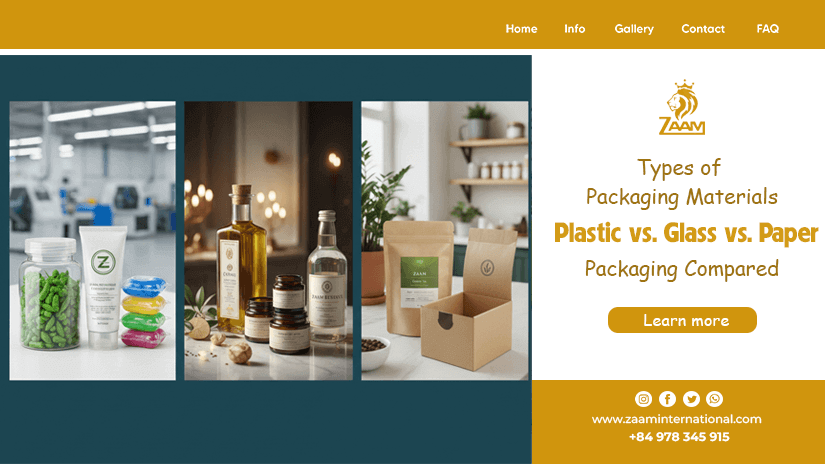
Types of Packaging Materials: Plastic vs. Glass vs. Paper Packaging Compared Leave a comment
Choosing the right packaging material is a critical decision for any business. Packaging affects product safety, brand perception, logistics costs, and sustainability goals. Among many options, plastic, glass, and paper packaging remain the most widely used across industries.
This article provides a clear packaging material comparison, outlining the pros and cons of each option and helping businesses choose the best types of packaging materials for products based on real use cases.
1. Plastic Packaging: Flexible and Cost-Efficient
Plastic packaging is one of the most common types of packaging materials due to its versatility and scalability.
Pros of Plastic Packaging
- Lightweight, reducing transportation costs
- Durable and impact-resistant
- Flexible shapes and sizes for many product types
- Good barrier protection against moisture and air
- Suitable for large-scale production
Cons of Plastic Packaging
- Environmental concerns if not properly recycled
- Perceived as less sustainable by some consumers
- Requires correct material selection for food or medical use
Best packaging for products such as:
Food containers, herbal products, cosmetics, medical supplies, household items.
Plastic packaging is ideal for businesses that need reliable protection, efficiency, and cost control.
2. Glass Packaging: Premium Look and Product Integrity
Glass packaging is often used for products that require purity, stability, and a high-end appearance.
Pros of Glass Packaging
- Non-reactive and food-safe
- Preserves taste, aroma, and product quality
- Premium appearance that builds trust
- Fully recyclable without quality loss
Cons of Glass Packaging
- Heavier, increasing shipping costs
- Fragile and prone to breakage
- Higher production and logistics expenses
Best packaging for products such as:
Beverages, food products, herbal items, cosmetics, and pharmaceuticals.
Glass packaging is suitable for brands that prioritize quality, transparency, and premium positioning.
3. Paper Packaging: Sustainable and Brand-Friendly
Paper packaging is increasingly popular as businesses focus on sustainability and eco-friendly branding.
Pros of Paper Packaging
- Renewable and biodegradable
- Strong eco-friendly brand image
- Easy to customize with printing and design
- Lightweight and cost-effective for dry products
Cons of Paper Packaging
- Limited resistance to moisture and grease
- Lower durability compared to plastic or glass
- Often requires inner lining for product protection
Best packaging for products such as:
Green tea, coffee, dry foods, retail boxes, outer packaging.
Paper packaging works well for businesses aiming to balance cost, sustainability, and visual branding.
4. Plastic vs. Glass vs. Paper: Quick Comparison
| Material | Cost | Durability | Sustainability | Best Use |
|---|---|---|---|---|
| Plastic | Low | High | Medium | Food, herbal, household |
| Glass | High | Medium | High | Premium food, beverages |
| Paper | Medium | Low–Medium | High | Dry goods, retail |
This table highlights why choosing packaging depends on both product requirements and brand strategy.
5. Packaging Selection Guide: How to Choose the Right Material
When selecting types of packaging materials, businesses should consider:
- Product type – liquid, dry, fragile, or sensitive
- Storage and transport – weight, distance, handling risks
- Brand positioning – mass-market or premium
- Regulatory requirements – food safety and industry standards
- Sustainability goals – recyclable or biodegradable options
This packaging selection guide helps businesses make informed decisions rather than following trends.
Why Zaam International Is the Right Types of Packaging Materials?
With experience across multiple industries, Zaam International provides plastic, glass, and paper packaging solutions tailored to real business needs.
Zaam International supports businesses by:
- Offering a wide range of packaging materials
- Ensuring quality, safety, and compliance standards
- Helping brands select the most suitable packaging for their products
Instead of a one-size-fits-all approach, Zaam International focuses on practical types of packaging materials solutions that support efficiency, branding, and long-term growth.
Conclusion
Choosing between plastic, glass, and paper packaging depends on your product type, brand positioning, and business priorities. Plastic packaging offers flexibility and cost efficiency, glass packaging delivers premium quality and product integrity, while paper packaging supports sustainability and branding.
There is no single best option for all products. The right types of packaging materials material is the one that protects your product, aligns with your market, and supports long-term growth. By understanding the pros and cons of each material, businesses can make smarter packaging decisions that balance performance, cost, and sustainability.
FAQs
1. What is the best types of packaging materials for food and herbal products?
Plastic and glass packaging are commonly used, depending on shelf life, storage, and brand positioning.
2. Is paper packaging types of packaging materials for food products?
Yes, especially for dry products, when combined with a food-grade inner lining.
3. When should businesses choose glass over plastic?
Glass is ideal for premium products that require purity, stability, and strong visual appeal.
