
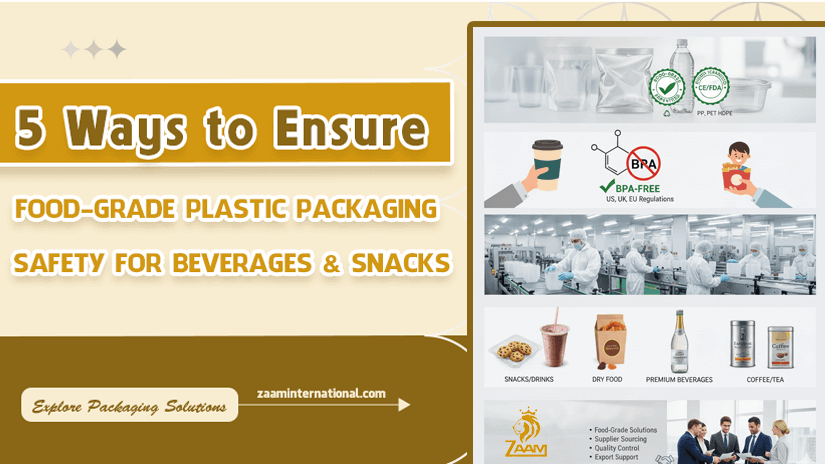
5 Ways to Ensure Food-Grade Plastic Packaging Safety for Beverages & Snacks Leave a comment
Food safety is a top priority for brands in the beverage and snack industry. From green tea and coffee to ready-to-eat snacks, packaging plays a key role in protecting product quality and consumer health. Choosing the right food-grade plastic packaging helps brands meet safety standards, build trust, and enter international markets more easily.
Below are 5 practical ways to ensure food-grade safety in plastic packaging for beverages and snacks.
1. Choose Certified Food-Grade Plastic Packaging
The first step is to use food-grade plastic packaging that is approved for direct contact with food and drinks. These materials are designed to be safe, stable, and suitable for daily use.
Common food-grade plastics include:
- PP (Polypropylene)
- PET (Polyethylene Terephthalate)
- HDPE (High-Density Polyethylene)
They are widely used for plastic trays and cups, beverage containers, and snack packaging. Always check that the packaging comes with proper food-contact certification, especially if the product is for export.
2. Use BPA-Free Containers for Beverages and Snacks
BPA-free containers are essential for protecting consumer health. BPA is a chemical that may cause health risks when it leaks into food or drinks.
For products like:
- Coffee and tea cups
- Cold drink containers
- Snack boxes and plastic trays
Using BPA-free plastic helps brands meet safety regulations in markets such as the US, UK, and EU. It also improves customer confidence and brand image.
3. Follow Hygiene Standards for Packaging Production
Good materials alone are not enough. Hygiene standards for packaging during production are just as important.
A reliable supplier should ensure:
- Clean manufacturing environments
- Proper handling and storage of packaging
- Quality inspection at every production stage
This is especially important for food, beverage, and cannabis packaging, where hygiene and safety rules are very strict. Clean production reduces contamination risk and ensures safe food packaging from factory to consumer.
4. Select the Right Packaging Type for Each Product
Different products need different packaging solutions to stay safe and fresh.
Examples include:
- Plastic trays and cups for snacks and takeaway drinks
- Paper box and carton box for dry food and retail products
- Glass packaging for premium beverages
- Tin packaging for coffee, tea, and long-term storage
- Household packaging for non-food daily-use items
Choosing the right packaging type helps maintain product quality, extend shelf life, and meet customer expectations.
5. Work with a Trusted Food Packaging Solution Partner
Managing packaging safety, sourcing, and compliance can be challenging, especially for growing brands. rWorking with a tusted partner makes the process easier.
Zaam International is a reliable solution for businesses looking for safe and compliant packaging. Zaam International provides:
- Food-grade plastic packaging for beverages and snacks
- Packaging solutions for green tea, coffee, household products, and cannabis
- Plastic, paper, glass, tin, and carton box packaging
- Supplier sourcing, quality inspection, and export support
With Zaam International, brands can focus on product development while ensuring packaging safety and quality.
Why Food-Grade Plastic Packaging Matters
Safe food packaging protects:
- Consumer health
- Product taste and freshness
- Brand reputation
It also helps brands comply with international regulations and build long-term trust with distributors and retailers.
Conclusion
Ensuring food-grade plastic packaging safety is essential for beverage and snack brands. By using certified materials, following hygiene standards, and choosing the right packaging partner, businesses can protect consumers and grow confidently. Zaam International offers complete packaging solutions to support brands at every stage.
FAQs
1. What is food-grade plastic packaging?
Food-grade plastic packaging is made from approved materials that are safe for direct contact with food and beverages.
2. Why are BPA-free containers important?
BPA-free containers reduce health risks and are required in many international markets for beverage and snack packaging.
3. Which packaging is suitable for tea and coffee?
Common options include plastic cups, tin packaging, glass packaging, and paper box solutions, depending on the product.
4. Does Zaam International provide different packaging types?
Yes. Zaam International supplies plastic, paper, glass, tin, and carton box packaging for multiple industries.
5. Can Zaam International support export requirements?
Yes. Zaam International helps with supplier sourcing, quality control, and export documentation.
